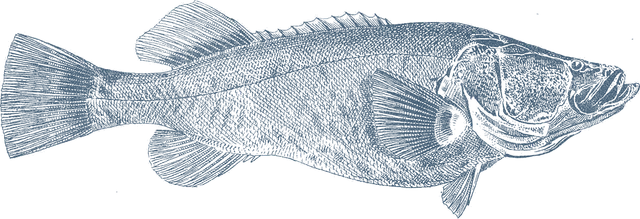

Silver perch
Where they live


- Size
- Commonly 25–40 cm.
- Where
- NSW · VIC · QLD · SA · ACT
- Habitat
- Once widespread in the Murray–Darling's flowing lowland rivers; now mostly met in stocked impoundments and farm dams.
- When
- Summer and autumn.
- Lifespan
- Up to about 27 years.
- Diet
- Omnivorous: insects and their larvae, snails, shrimp and plant material.
- Breeding
- Late spring and summer, moving upstream in schools as flows rise. Eggs float and drift.
- Matures
- Males about 3 years, females about 5.
- Eating
- Good — a farmed table fish in its own right.
Drainage map
- Murray–Darling Basin
- North East Coast
Shaded by drainage division — the area draining to one sea or basin. Silver perch live somewhere in each shaded division, not everywhere in it.
Boundaries: ABS · CC BY 4.0
The fish
Silver perch are schooling, migratory fish of the Murray–Darling's lowland rivers. They move upstream in large groups in spring and summer, and spawn when the rivers rise, releasing floating eggs that drift downstream.
Unlike golden perch and cod, silvers are omnivores. They graze on algae and plants as well as insects, snails and small crustaceans, and their small mouths reflect that. In dams they cruise weed edges and open water in loose schools.
They're also one of Australia's farmed freshwater fish, and a large share of the silver perch caught today are stocked into dams and farm dams. In those waters they fight hard for their size and are good eating.
Telling them apart
- Silver-grey body, darker on the back, with small scales.
- Small head and small mouth relative to the body.
- Forked tail — the easiest way to separate it from golden perch.
- Spiny first dorsal fin; fins often grey to dusky.
Easily confused with


How they're fished
Small baits — worms, shrimp, peeled yabby tails — fished lightly; small lures and flies along weed edges in dams.
When: Summer and autumn.
Tips from the water
- Use small hooks — size 6 to 10 — and light leaders.
- In dams, fish weed edges and shallow bays early and late.
- Berley with a little bread or crushed shrimp to hold a school.
- Small soft plastics and nymph-style flies catch them on light gear.
- Rod
- Light 2–4 kg spin rod, 6'6"–7'.
- Reel
- 1000–2500 spin reel.
- Line
- 6–10 lb braid or monofilament.
- Leader
- 6–10 lb fluorocarbon.
- Small soft plastics
- Micro blades
- Small spinners
- Nymph and wet-fly patterns
- Worms
- Shrimp
- Peeled yabby tail
- Bread or dough in stocked dams
Through the year
- Nov–MarBest of the year — warm water and active schools.
- Apr–MayStill on in dams while the water holds warmth.
- Jun–OctQuiet. Occasional fish on warm afternoons.
Waters to know
| Water | State | Why |
|---|---|---|
| Stocked impoundments and farm dams | NSW / QLD | Most silver perch angling is in stocked water — check your state's stocking records. |
| Lake Mulwala and the central Murray | NSW / VIC | The most important wild population — release any wild fish. |
| Queensland SIPS dams | QLD | Several Stocked Impoundment Permit dams carry silver perch. |
Access, boating and bait rules differ from water to water — check before you go.
Silver perch in Australian water

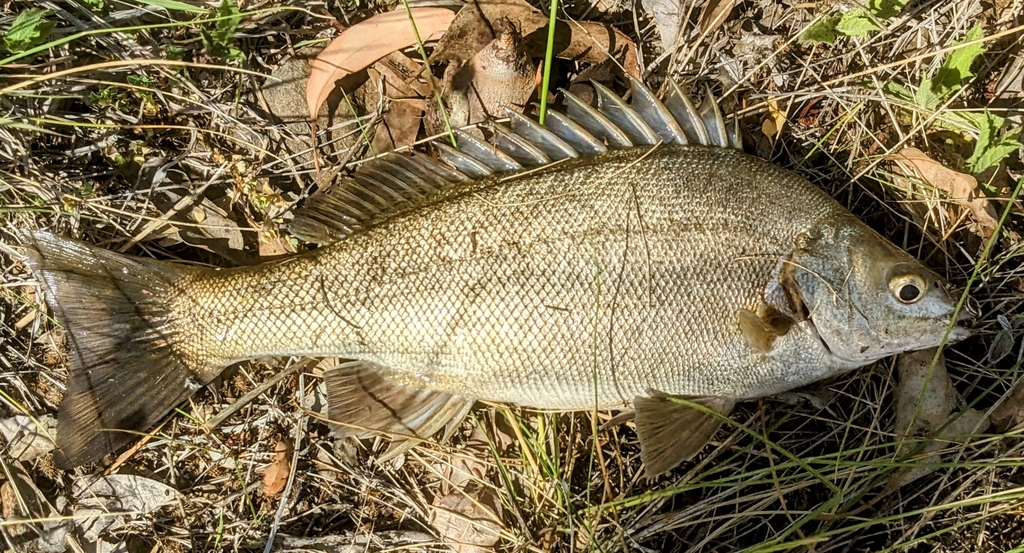

Fish photographed in Australia and shared on iNaturalist and Wikimedia Commons. Got a better one? Put it in a dispatch.
Handling & release
- Wet hands, quick release — silvers have soft mouths and lose scales easily.
- Don't lay them on dry ground or a hot boat floor.
On the table
Stocked silver perch eat well — mild, white and moist. Keep to the limits and only from stocked water; let wild river fish go.
Rules & seasons
- QLDMinimum 30 cm. Possession 5 combined with barcoo and Welch's grunter, no more than 2 of them silver perch. No take in the Paroo and Warrego basins.
- ElsewhereWild-fish protections apply in places and differ by state — check before keeping one.
Checked October 2026. Rules change and vary between waters — confirm with the state agency before you fish: NSW · VIC · QLD · SA · ACT
Silver perch: questions
Can you keep silver perch?
From stocked waters in most states, within limits. Wild river populations are protected or tightly restricted — check your state before keeping one.
How do you tell silver perch from golden perch?
Look at the tail. Silver perch have a forked tail and silver-grey colour; golden perch have a rounded tail and gold colour.
Latest Silver perch dispatches
All →No silver perch dispatches yet. Be the first to write one