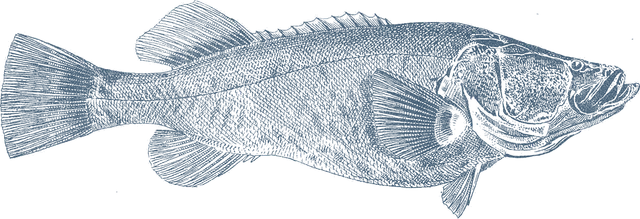

Where they live


- Size
- Commonly 35–50 cm; fish over 60 cm are rare and special.
- Where
- NSW · VIC · QLD · SA
- Habitat
- Lowland rivers, weir pools and billabongs across the Murray–Darling and Lake Eyre basins, and as a separate subspecies in Queensland's Fitzroy system. Heavily stocked in impoundments.
- When
- A warm-water fish: best from late spring through autumn, with a hot bite on rising water after rain.
- Lifespan
- Up to about 25 years.
- Diet
- Shrimp, yabbies, small fish, insects and their larvae.
- Breeding
- Spring and summer, usually triggered by rising water. Eggs float and drift with the current.
- Matures
- 2–4 years old.
- Eating
- Very good — firm, sweet, white flesh.
Drainage map
- Lake Eyre Basin
- Murray–Darling Basin
- North East Coast
Shaded by drainage division — the area draining to one sea or basin. Golden perch live somewhere in each shaded division, not everywhere in it.
Boundaries: ABS · CC BY 4.0
The fish
Golden perch — yellowbelly to almost everyone who fishes for them — are the most widely caught native sportfish in the Murray–Darling. They are tough: they handle hot, muddy, low-oxygen water that would kill trout, and they turn up everywhere from tiny Queensland creeks to the Coorong's edge.
They are great travellers. Tagged fish have moved hundreds and even thousands of kilometres along the Murray–Darling, swimming upstream as rivers rise. Spawning is tied to flow: when a fresh comes down in spring or summer, golden perch release floating eggs that drift for days as they develop. That's why weirs and regulated rivers hurt them, and why environmental flows matter.
Yellas are schooling fish. Where you catch one there are usually more, and in impoundments they gather on drowned timber lines, rocky points and the edges of old river channels. They feed mostly on the bottom and around structure, and they come alive in warm, rising water.
Telling them apart
- Deep, compressed body with a small head and a distinctly concave forehead — big fish look humped.
- Golden yellow to olive-bronze on the back, bright yellow to cream on the belly.
- Lower jaw protrudes slightly; the mouth is smaller than a cod's.
- Rounded tail, and spiny first dorsal fin joined to the soft second dorsal.
Easily confused with

Silver-grey with a small head and a forked tail — golden perch have a rounded tail and gold colour.

Dark grey-black with a large eye and a rounded snout. Protected.

Dark vertical bars and red-orange fins. A pest — don't return it.
How they're fished
Lipless crankers and blades hopped along the bottom, small spinnerbaits, and deep hard-bodies trolled along drowned timber lines. Shrimp and yabbies on the bottom are the classic bait. Yellas school up — where there's one, keep casting.
When: A warm-water fish: best from late spring through autumn, with a hot bite on rising water after rain.
Tips from the water
- Lipless crankers and blades hopped off the bottom are deadly on schooled fish in dams.
- Troll deep-diving hard-bodies along timber lines and old river channels so they knock the bottom.
- In rivers, fish the slower water below riffles and around snags in deeper holes.
- A rising river after rain is the time to go — yellas move and feed hard on fresh water.
- If you lose the bite, change depth before you change spots.
- Rod
- 6'6"–7' spin or baitcast rod, 3–6 kg.
- Reel
- 2500–3000 spin reel or a small baitcaster.
- Line
- 10–20 lb braid.
- Leader
- 12–20 lb fluorocarbon.
- Lipless crankbaits and vibes
- Metal blades (vibes) hopped off the bottom
- Small spinnerbaits
- Deep-diving hard-bodies, 50–80 mm
- Soft plastics on jig heads, including curl tails
- Shrimp
- Live yabbies
- Worms
- Bardi grubs
Through the year
- Oct–DecThe bite builds as the water warms. Rising rivers after spring rain are prime.
- Jan–MarPeak season. Early mornings and evenings in the heat; troll the timber in dams.
- Apr–MayStill good while the water holds its warmth; fish start to school up deeper.
- Jun–SepSlow in the south. Fish deep and slow with blades and bait on warm, sunny days.
Waters to know
| Water | State | Why |
|---|---|---|
| Lake Keepit | NSW | Stocked impoundment known for yella numbers. |
| Burrendong Dam | NSW | Huge lake with timbered arms and plenty of golden perch. |
| Lake Mulwala | NSW / VIC | Yellas among the drowned red gums. |
| Menindee Lakes and the Darling | NSW | Classic western-NSW yella water when there's water in it. |
| Lake Eppalock | VIC | Stocked and productive. |
| Lake Boga and the Murray weir pools | VIC | Lowland water golden perch love. |
| Leslie and Coolmunda dams | QLD | Southern Queensland stocked dams. |
| River Murray, Riverland | SA | Callop country — fish the backwaters and snags. |
Access, boating and bait rules differ from water to water — check before you go.
Golden perch in Australian water

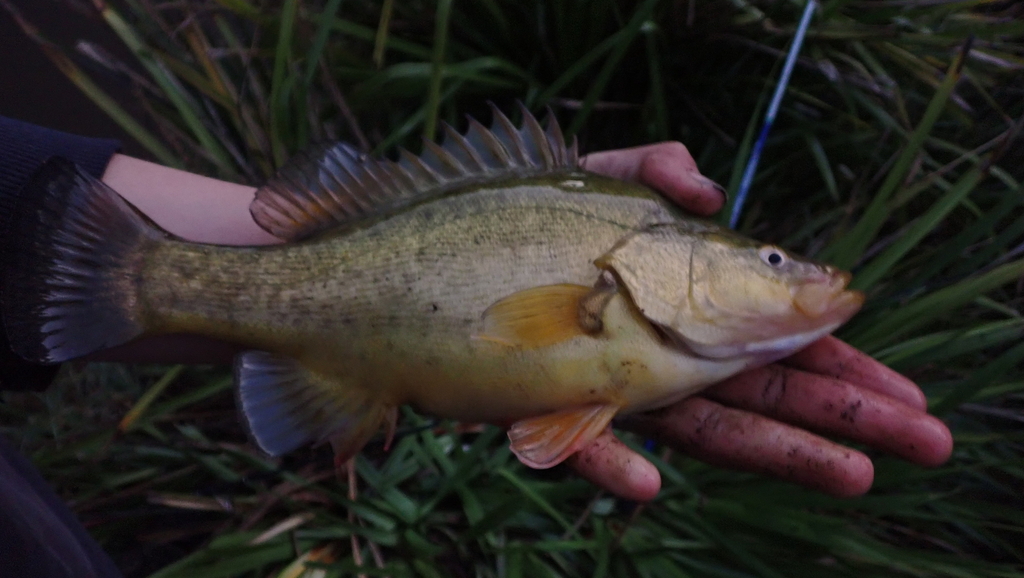
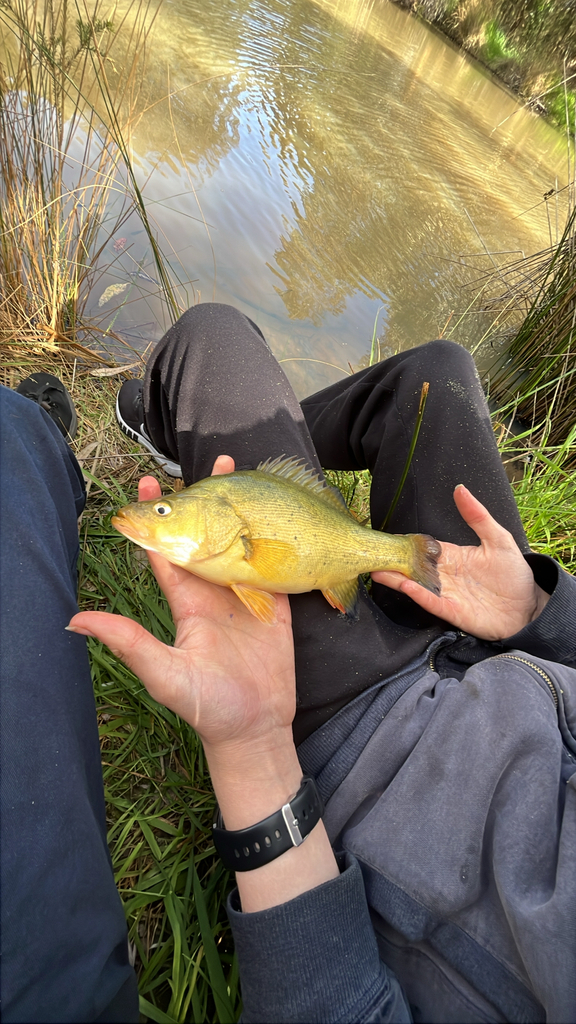
Fish photographed in Australia and shared on iNaturalist and Wikimedia Commons. Got a better one? Put it in a dispatch.
Handling & release
- Wet your hands before handling to protect the slime layer.
- Support the fish horizontally; don't squeeze the belly.
- Golden perch caught from deep water can suffer barotrauma — release them quickly, and use a release weight if you have one.
On the table
Golden perch is one of the best-eating freshwater fish in Australia — firm, white and sweet. Keep fish from moderate sizes, bleed them and get them on ice quickly.
Rules & seasons
- QLDMinimum 30 cm, possession limit 10.
Checked October 2026. Rules change and vary between waters — confirm with the state agency before you fish: NSW · VIC · QLD · SA
Golden perch: questions
Are golden perch and yellowbelly the same fish?
Yes. Golden perch, yellowbelly, yella and callop (in South Australia) are all Macquaria ambigua.
What's the best bait for golden perch?
Live shrimp and yabbies on the bottom are hard to beat, with worms a close third.
When are golden perch biting?
From late spring through autumn, especially when the water is warm and rising after rain.