
Where they live


- Size
- Commonly 45–75 cm.
- Where
- QLD · NT
- Habitat
- Two species. Southern saratoga are native to Queensland's Fitzroy River system and stocked into south-east and central Queensland dams. Gulf saratoga live in rivers and billabongs draining to the Gulf of Carpentaria and across the Top End. Both patrol the surface along weed beds, lilies and bankside timber.
- When
- Spring through autumn, on the surface on warm still days.
- Diet
- Insects that fall on the water, small fish, frogs and shrimp.
- Breeding
- Spring and early summer. The female carries the eggs and then the fry in her mouth for several weeks.
- Lineage
- Bony-tongues — an ancient family related to the arowana of Asia and South America.
- Eating
- Poor and bony. A sportfish for release.
Drainage map
- Carpentaria Coast
- North East Coast
- Tanami–Timor Sea Coast
Shaded by drainage division — the area draining to one sea or basin. Saratoga live somewhere in each shaded division, not everywhere in it.
Boundaries: ABS · CC BY 4.0
The fish
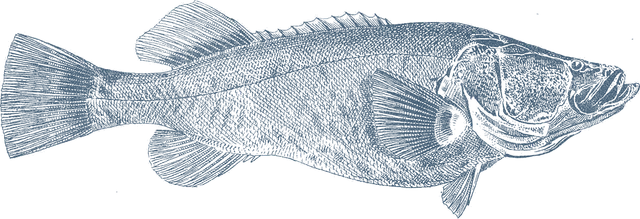
Saratoga are living fossils — bony-tongued fish whose family dates back to the age of the dinosaurs. They have long bodies, big, armour-like scales, an upturned mouth and two short barbels on the chin, all built for feeding on the surface.
Toga patrol the top of the water along weed beds, lily pads and bankside timber, waiting for insects, frogs and small fish. They are sight feeders, and a well-cast surface lure close to cover often gets an instant strike.
They're mouthbrooders. In spring and summer the female holds the fertilised eggs and then the young fry in her mouth for weeks, letting them out to feed and taking them back when threatened. Females carrying young won't feed, so careful handling in spring matters.
There are two Australian species: southern saratoga in central Queensland's Fitzroy system and stocked dams further south, and Gulf saratoga in rivers draining to the Gulf of Carpentaria, Cape York and the Top End.
Telling them apart
- Long, flattened body with large scales.
- Upturned mouth and two short barbels on the chin.
- Dorsal and anal fins set far back near the tail.
- Southern saratoga: small red or pink spots on each scale. Gulf saratoga: crescent-shaped red-pink marks on the scales.
Where you're fishing usually tells you which one it is: southern saratoga in central and south-east Queensland, Gulf saratoga across the Gulf country and the Top End. Queensland counts them together for the bag limit.
Easily confused with

No barbels, rounded mouth line, spiny dorsal fin in the middle of the back.
How they're fished
Surface lures and flies — poppers, walk-the-dog lures, cicada patterns — cast tight to cover. Toga have bony mouths: sharp hooks and a firm strike.
When: Spring through autumn, on the surface on warm still days.
Tips from the water
- Stay quiet and cast from a distance — toga spook easily.
- Cast tight to lily pads, weed edges and overhanging timber.
- Fish the surface at dawn, dusk, and on hot, still days.
- Sharpen hooks: saratoga have bony mouths, and many fish are lost on the jump.
- Lower the rod tip when a fish jumps to keep tension without pulling the hook.
- Rod
- 6'–6'6" baitcaster or spin rod, 2–5 kg.
- Reel
- Small baitcaster or 2500 spin reel.
- Line
- 10–20 lb braid.
- Leader
- 20–30 lb monofilament.
- Surface walkers and poppers
- Cicada and insect imitations
- Small spinnerbaits
- Shallow-diving hard-bodies
- Flies: deer-hair poppers, gurglers and small streamers
- Live shrimp
- Live insects — crickets and grasshoppers
Through the year
- Sep–NovBreeding season: females may be mouthbrooding. Handle fish quickly and release them.
- Dec–MarPrime surface fishing in the heat.
- Apr–MayStill active while the water stays warm.
- Jun–AugSlow; fish the warmest middle of the day.
Waters to know
| Water | State | Why |
|---|---|---|
| Fitzroy, Dawson and Mackenzie rivers | QLD | The southern saratoga's native range. |
| Callide Dam | QLD | Central Queensland stocked dam. |
| Lake Maraboon (Fairbairn Dam) | QLD | Near Emerald. |
| Borumba Dam | QLD | South-east Queensland stocked dam. |
| Cape York rivers | QLD | Gulf saratoga in the Jardine, Wenlock and Mitchell systems. |
| Top End rivers and billabongs | NT | Gulf saratoga in Kakadu and Arnhem Land. |
Access, boating and bait rules differ from water to water — check before you go.
Saratoga in Australian water
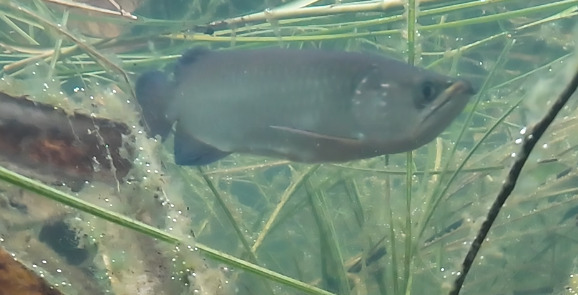
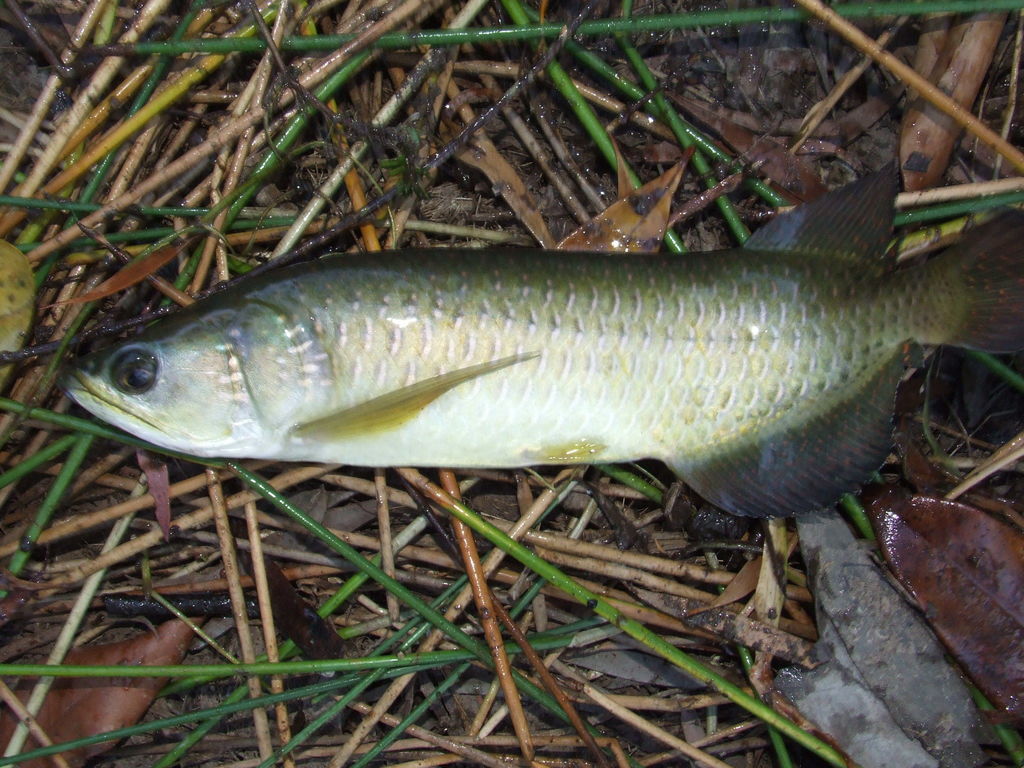
Fish photographed in Australia and shared on iNaturalist and Wikimedia Commons. Got a better one? Put it in a dispatch.
Handling & release
- Use a rubber net — saratoga scales are easily damaged.
- In spring, a female might drop her young when caught. Release her quickly where she was caught.
- Don't hold them vertically by the jaw.
On the table
Saratoga are poor eating — bony and soft. Release them.
Rules & seasons
- QLDMinimum 50 cm, possession 1, southern and Gulf saratoga combined.
Checked October 2026. Rules change and vary between waters — confirm with the state agency before you fish: QLD · NT
Saratoga: questions
Why are saratoga called bony-tongues?
They have toothed bones on the tongue, which help them grip prey. It's shared with their relatives the arowana.
When do saratoga breed?
In spring and early summer. Females carry the eggs and fry in their mouths for several weeks.
Latest Saratoga dispatches
All →No saratoga dispatches yet. Be the first to write one