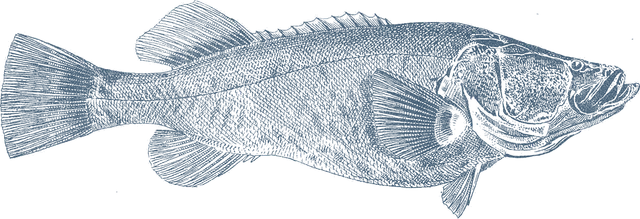

Where they live


- Size
- Commonly 30–40 cm.
- Where
- NSW · VIC
- Habitat
- Tidal reaches of coastal rivers and lakes — rock walls, bridge pylons and snags around the salt-fresh line.
- When
- Spring through autumn; in NSW they're catch-and-release only during the winter spawning closure.
- Lifespan
- Very long-lived — fish over 40 years old have been recorded.
- Diet
- Shrimp, prawns, small crabs, small fish and insects.
- Breeding
- Winter, at the lower estuary near the entrance, in saltier water than bass.
- Matures
- Around 4–6 years.
- Eating
- Good — but most are released.
Drainage map
- South East Coast (NSW)
- South East Coast (Victoria)
Shaded by drainage division — the area draining to one sea or basin. Estuary perch live somewhere in each shaded division, not everywhere in it.
Boundaries: ABS · CC BY 4.0
The fish
Estuary perch are the bass's estuary cousin. Where bass spend most of their lives in fresh water, EPs stay lower in the system, around the salt-fresh line and in the tidal reaches of coastal rivers and lakes.
They school around structure — rock walls, bridge pylons, deep snags, fallen trees and weed beds — and feed heavily on shrimp, prawns and small fish carried by the tide. When you find one there are usually more, and a school can be caught one after another.
In winter they move down to the estuary entrances to spawn. EPs are remarkably long-lived and slow-growing, so a 40 cm fish can be decades old.
Telling them apart
- Silvery to olive-bronze body, paler than a bass.
- Concave (dished) forehead and a longer, pointed snout.
- Mouth slightly smaller than a bass's.
- Spiny dorsal fin joined to the soft dorsal by a notch; tail slightly forked.
Easily confused with

Rounded head, bronze-olive colour, and usually further upstream in fresh water.
How they're fished
Small soft plastics and blades worked through deep snags and along rock walls; surface lures in the evening. EPs school, so one fish usually means more.
When: Spring through autumn; in NSW they're catch-and-release only during the winter spawning closure.
Tips from the water
- Fish around the turn of the tide, when EPs move onto structure to feed.
- Use a sounder to find schools on deep snags and rock walls, then work blades or plastics vertically.
- On summer evenings, surface lures along rock walls and weed edges.
- Keep moving until you find a school, then stay with it.
- Rod
- 6'6"–7' light spin rod, 1–4 kg.
- Reel
- 1000–2500 spin reel.
- Line
- 6–10 lb braid.
- Leader
- 8–12 lb fluorocarbon.
- Soft plastics — shrimp and minnow patterns
- Small blades
- Suspending hard-bodies
- Surface lures for evenings
- Small flies — shrimp and Clouser patterns
- Live shrimp
- Live prawns
- Small live baitfish where legal
Through the year
- Sep–NovFish move back up from the spawning grounds and spread through the estuary.
- Dec–MarPrime season — surface lures in the evenings, plastics on snags by day.
- AprPre-spawn schooling begins.
- May–AugCatch-and-release only in NSW. Fish school in the lower estuary.
Waters to know
| Water | State | Why |
|---|---|---|
| Mitchell, Nicholson and Tambo rivers (Gippsland Lakes) | VIC | Famous EP water. |
| Mallacoota Inlet and the Genoa River | VIC | Excellent EP fishing. |
| Snowy River estuary at Marlo | VIC | Snags and drop-offs. |
| Hopkins River | VIC | Western Victoria's EP fishery. |
| Bega, Tuross, Moruya and Clyde rivers | NSW | South-coast estuaries. |
| Shoalhaven and Hawkesbury rivers | NSW | Further north, overlapping with bass. |
Access, boating and bait rules differ from water to water — check before you go.
Estuary perch in Australian water
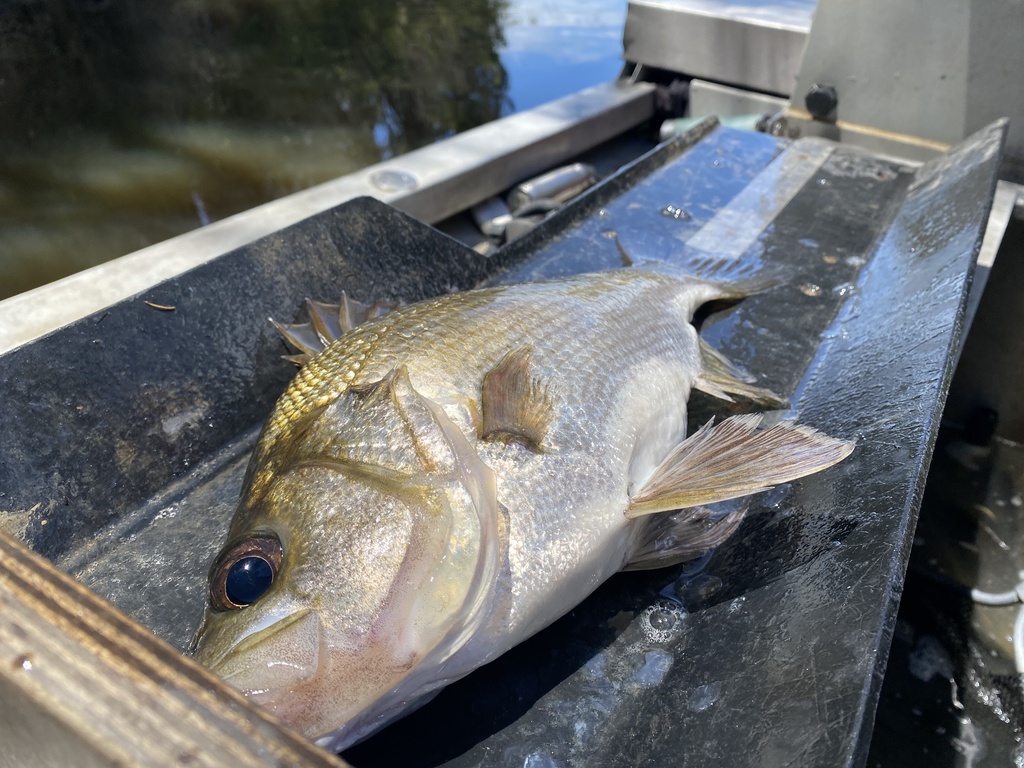
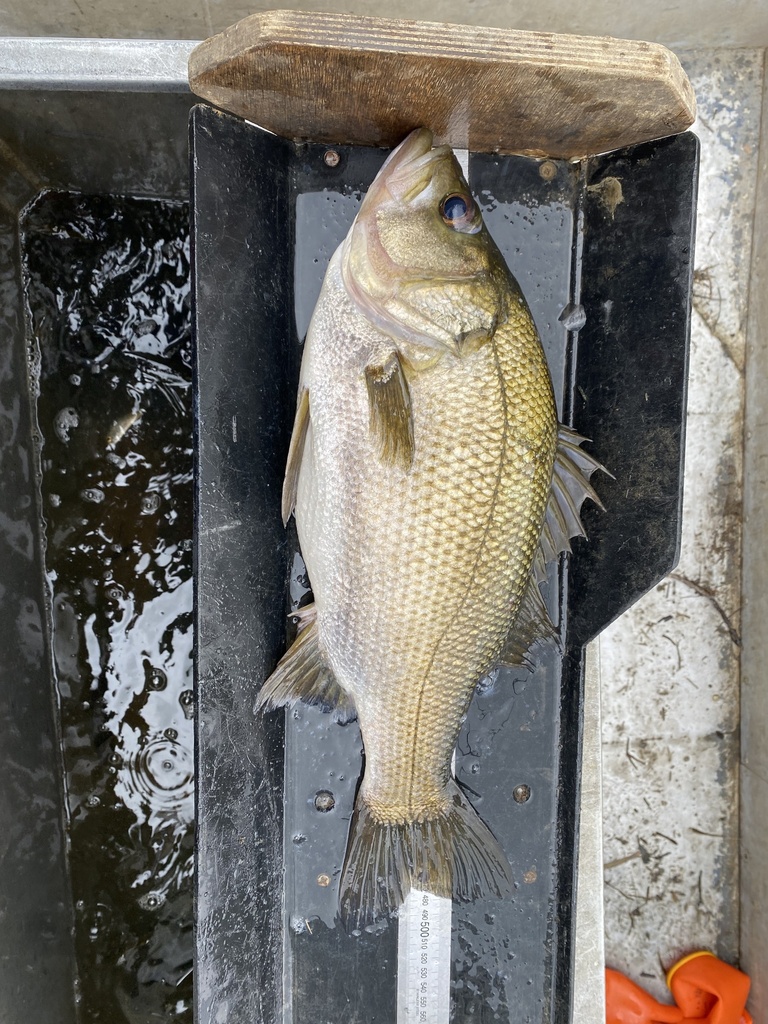
Fish photographed in Australia and shared on iNaturalist and Wikimedia Commons. Got a better one? Put it in a dispatch.
Handling & release
- Fish from deep water may have barotrauma — use a release weight if needed.
- Wet hands, quick photos, and release near the school.
On the table
EPs eat well — firm, white and mild. Their slow growth means it's best to keep only the occasional fish and release the big ones.
Rules & seasons
- NSW — catch-and-release only 1 May to 31 AugSame closure as Australian bass. Outside it: bag 2 combined with bass, possession 4.
Checked October 2026. Rules change and vary between waters — confirm with the state agency before you fish: NSW · VIC
Estuary perch: questions
Where can I catch estuary perch?
In the tidal reaches of coastal rivers and lakes from the NSW mid-coast to western Victoria, around rock walls, bridges and deep snags.
Are estuary perch and bass the same?
No, but they're close relatives and can hybridise. EPs have a concave forehead and pointed snout; bass have a rounded head.
Latest Estuary perch dispatches
All →No estuary perch dispatches yet. Be the first to write one