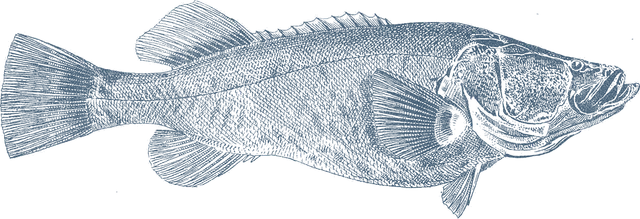

Where they live


- Size
- Commonly 30–50 cm in streams; lake fish run bigger, and trophy browns pass 70 cm.
- Where
- NSW · VIC · TAS · SA · ACT
- Habitat
- Cold, clean water: high-country streams in NSW and Victoria, the Snowy Mountains lakes (Eucumbene, Jindabyne), and Tasmania's Central Highlands. Released in the 1860s and still stocked.
- When
- Stream fishing opens in spring and is best through summer hatches. Lakes fish year-round, with browns running up spawning rivers in autumn.
- Lifespan
- Usually 5–10 years; big lake fish can live longer.
- Diet
- Aquatic insects, terrestrial insects, mudeyes, small fish (galaxias, other trout), yabbies and frogs.
- Breeding
- Autumn and early winter. Fish run up streams and spawn in gravel nests (redds).
- Arrived
- 1864, hatched at the Salmon Ponds in Tasmania from eggs shipped from England.
- Eating
- Good — best from cold, clean water.
Drainage map
- Murray–Darling Basin
- South Australian Gulf
- South East Coast (NSW)
- South East Coast (Victoria)
- South West Coast
- Tasmania
Shaded by drainage division — the area draining to one sea or basin. Brown trout live somewhere in each shaded division, not everywhere in it.
Boundaries: ABS · CC BY 4.0
The fish
Brown trout arrived in Australia as eggs packed in moss and ice aboard the Norfolk in 1864, and were hatched at the Salmon Ponds on Tasmania's River Plenty. From there they spread to the mainland's cold rivers and lakes, and many waters now have self-sustaining wild populations.
Browns are cautious, intelligent fish. They feed on insects hatching from the water, on beetles and grasshoppers blown onto it, and on smaller fish, and big browns become nocturnal hunters. In lakes they cruise the edges looking for food — which is why polaroiding (spotting fish through polarised glasses) is such a big part of Tasmanian trout fishing.
In autumn, lake browns colour up and run into streams to spawn. Males develop a hooked lower jaw (a kype) and become aggressive, and spawning runs offer some of the best fishing of the year where they're open.
Telling them apart
- Golden-brown to bronze body.
- Black spots and red or orange spots, often with a pale halo.
- Tail is square and has few or no spots.
- Adipose fin often tinged orange or red.
- Spawning males develop a hooked lower jaw.
Easily confused with

Pink stripe along the side and spots right across the tail.
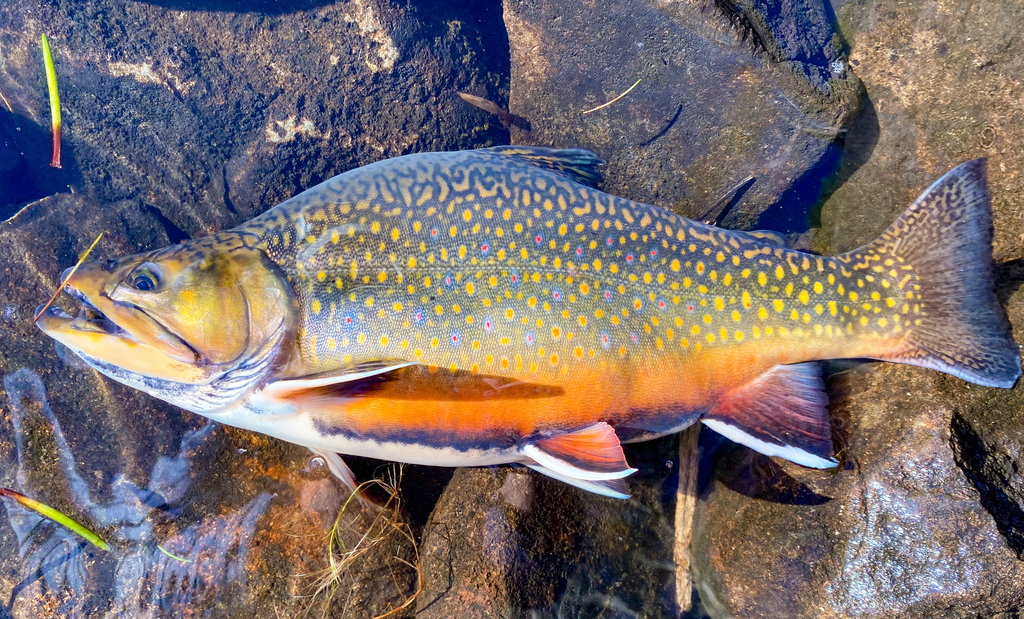
Pale worm-like markings on the back and white-edged lower fins. Stocked in a few lakes.

Stocked in western Victorian lakes; black gums and silvery body.
How they're fished
Fly — dry flies to rising fish, nymphs in the riffles, streamers after dark — or small minnow lures and spinners in streams. Lake browns are caught trolling, mudeye-fishing at night and polaroiding the edges.
When: Stream fishing opens in spring and is best through summer hatches. Lakes fish year-round, with browns running up spawning rivers in autumn.
Tips from the water
- Walk the banks slowly with polarised glasses and look for cruising fish.
- Cast upstream in streams and let the fly or lure drift naturally.
- Fish the evening rise in summer.
- Mudeyes under a float at night catch big lake browns in summer.
- Streamers and dark lures after dark find the biggest fish.
- Be stealthy: trout see you through clear water.
- Spin
- 6'6"–7' light rod, 1–3 kg, 2000 spin reel, 4–6 lb line.
- Fly
- 4–6 weight rod with floating line; intermediate or sinking lines in lakes.
- Trolling
- Medium spin or baitcast outfit with leadcore or downriggers in summer.
- Small bladed spinners
- Minnow-pattern hard-bodies, 30–70 mm
- Small soft plastics
- Winged trolling lures for lakes
- Flies: mayfly duns and spinners, beetles, hoppers, bead-head nymphs, Woolly Buggers and the Mrs Simpson
- Mudeyes
- Worms
- Crickets
- Grubs
- Check — some waters are artificial-lure or fly only
Through the year
- Aug–OctTasmania opens in August; Victoria's streams in September; NSW streams on the October long weekend. High water — spinners and worms.
- Nov–FebInsect hatches and dry-fly fishing; mudeyes at night in lakes.
- Mar–MayBrowns colour up and run into spawning streams — aggressive fish.
- Jun–JulMainland streams closed. Lakes stay open for trolling and polaroiding.
Waters to know
| Water | State | Why |
|---|---|---|
| Great Lake and Arthurs Lake | TAS | Central Highlands lakes with big wild populations. |
| Penstock and Little Pine lagoons | TAS | Famous fly-fishing waters. |
| Western Lakes | TAS | Remote sight-fishing for wild browns. |
| Macquarie and Meander rivers | TAS | Classic lowland trout rivers. |
| Lake Eucumbene and Lake Jindabyne | NSW | Snowy Mountains lakes. |
| Thredbo and Eucumbene rivers | NSW | Autumn spawning runs. |
| Goulburn River below Eildon | VIC | Big wild browns. |
| Kiewa, Howqua and Mitta Mitta rivers | VIC | North-east Victorian streams. |
Access, boating and bait rules differ from water to water — check before you go.
Brown trout in Australian water
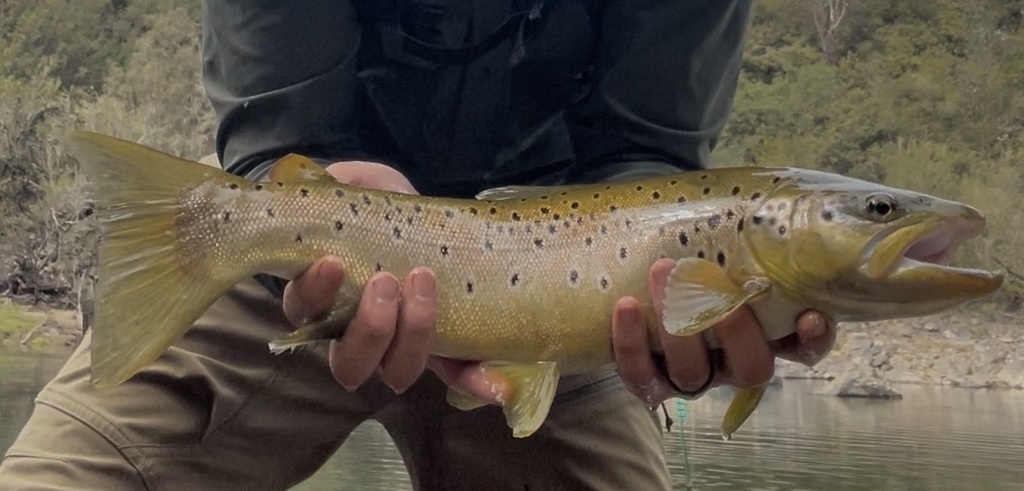
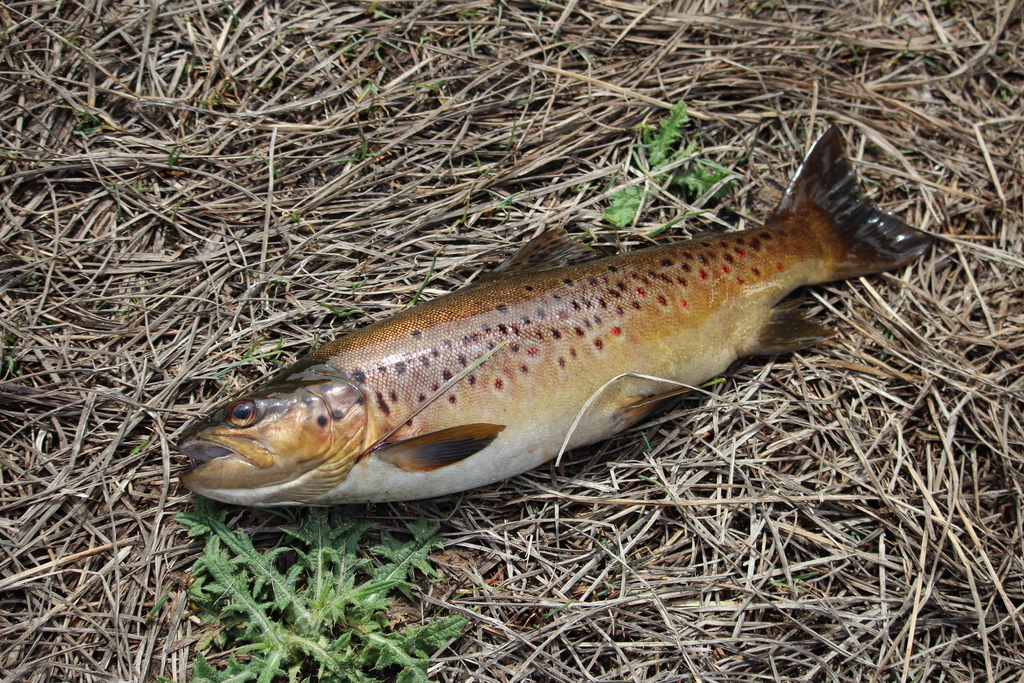
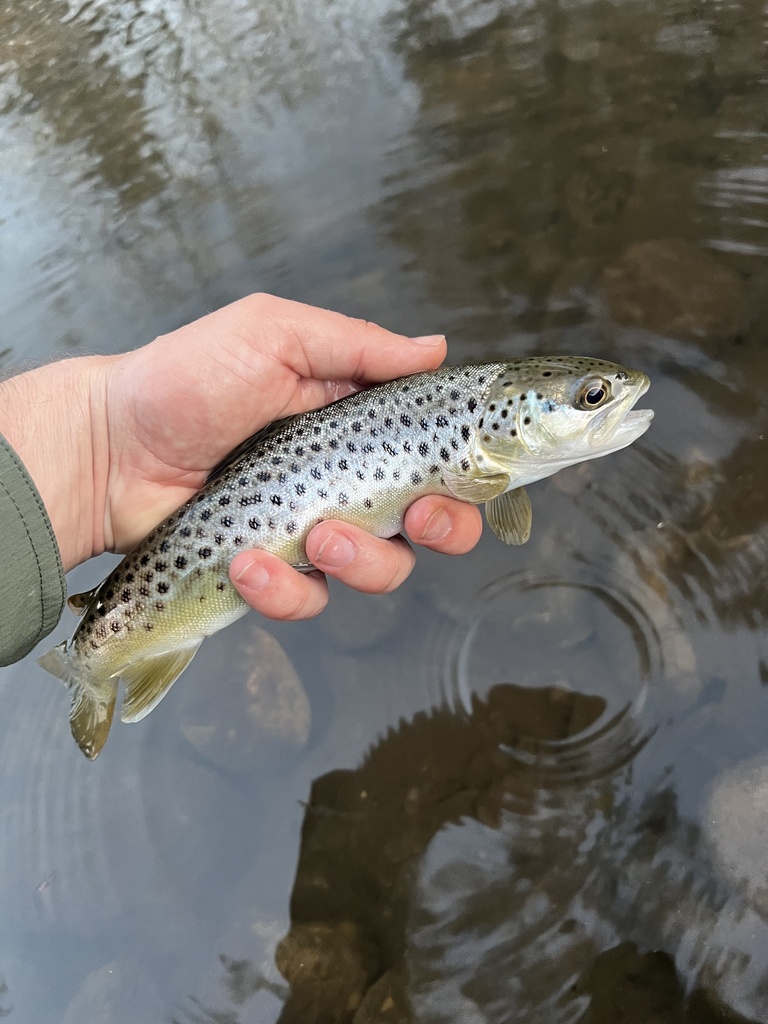
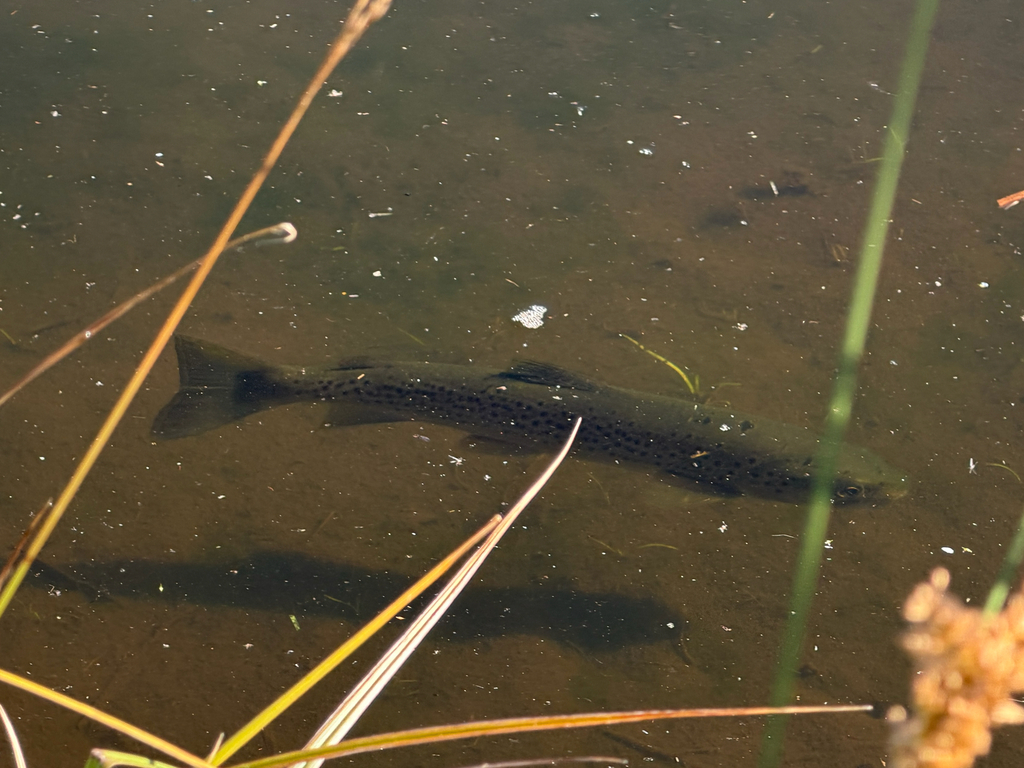
Fish photographed in Australia and shared on iNaturalist and Wikimedia Commons. Got a better one? Put it in a dispatch.
Handling & release
- Trout are sensitive to heat — release them quickly in summer and keep them in the water.
- Use barbless hooks on flies and lures.
- Wet your hands and support the fish.
On the table
Brown trout are good eating, especially from cold water. Lake fish feeding on yabbies and mudeyes can be pink-fleshed. Bleed and ice them immediately.
Rules & seasons
- Vic — rivers & streams closed over winterFrom midnight on the Monday of the King's Birthday weekend in June to midnight on the first Friday in September (in 2026, 9 June to 4 September). Most lakes and impoundments stay open.
- NSW — rivers & streams closed over winterTrout streams close in June and reopen on the October long weekend; lakes such as Eucumbene stay open. Check NSW DPIRD for this season's dates.
- TasThe 2026–27 season opened on Saturday 1 August 2026 (first Saturday in August). See the Inland Fisheries Service for close dates and water-specific rules.
Checked October 2026. Rules change and vary between waters — confirm with the state agency before you fish: NSW · VIC · SA · ACT · TAS
Brown trout: questions
When does trout season open?
Tasmania opens on the first Saturday in August, Victoria's streams in early September and NSW streams on the October long weekend. Lakes in all three states mostly stay open year-round.
What's the best bait for brown trout?
Mudeyes under a float at night in lakes and worms in streams. Some waters are artificial-lure or fly only.
When did trout come to Australia?
Brown trout eggs arrived in Tasmania in 1864 and were hatched at the Salmon Ponds on the River Plenty.
Latest Brown trout dispatches
All →No brown trout dispatches yet. Be the first to write one