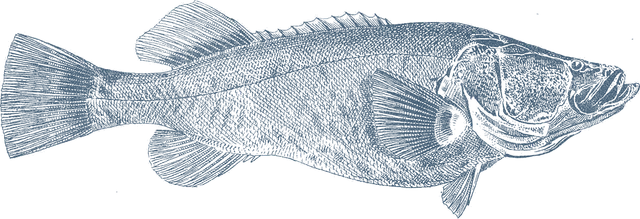

Freshwater catfish
Where they live


- Size
- Commonly 30–50 cm, up to about 90 cm.
- Where
- NSW · VIC · QLD · SA
- Habitat
- Slow rivers, lakes and billabongs. Builds circular nests of gravel on the bottom in spring and summer and guards them.
- When
- Spring through autumn, best at night.
- Lifespan
- Around 8–10 years.
- Diet
- Shrimp, yabbies, snails, insect larvae and small fish, found by feel and smell.
- Breeding
- Spring and summer. The male builds a circular nest of gravel and pebbles up to 2 m across and guards it.
- Watch out
- Sharp spines on the dorsal and pectoral fins give a painful wound.
- Eating
- Excellent — firm, white and boneless fillets.
Drainage map
- Murray–Darling Basin
- North East Coast
- South East Coast (NSW)
Shaded by drainage division — the area draining to one sea or basin. Freshwater catfish live somewhere in each shaded division, not everywhere in it.
Boundaries: ABS · CC BY 4.0
The fish
The freshwater catfish, or jewie, is a bottom-dwelling fish of slow rivers, lakes and billabongs. It feeds mostly at night, finding food with its sensitive barbels, and spends the day in cover.
Their nests are remarkable. In spring and summer the male clears a round depression and lines it with stones and gravel, sometimes two metres across. The female lays eggs in it and the male guards the nest and fans the eggs until they hatch.
The tail fin is joined to the dorsal and anal fins in one continuous fin — hence the name eel-tailed catfish — and the body tapers to a point. Fish in coastal rivers can be common; those in the Murray–Darling are now rare.
Telling them apart
- Eel-like tail: the second dorsal, tail and anal fins are joined into one fin.
- Four pairs of barbels around the mouth.
- Mottled brown to grey-green on the back, pale belly.
- A sharp, serrated spine at the front of the dorsal fin and each pectoral fin.
Easily confused with
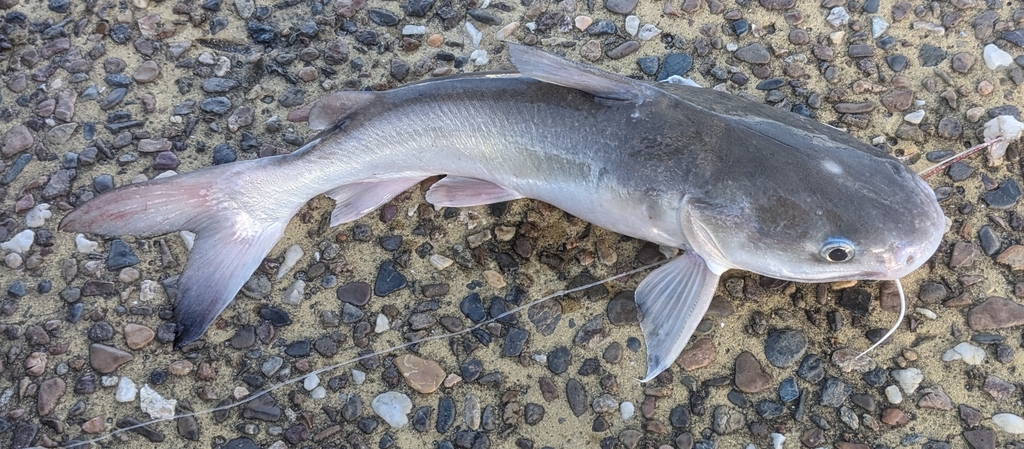
Northern rivers only, with a forked tail and a separate adipose fin.
How they're fished
Mostly a bait fish — worms, shrimp and yabbies on the bottom after dark. Will take slow lures dragged along the bottom.
When: Spring through autumn, best at night.
Tips from the water
- Fish at night with bait on the bottom in slow, deep water.
- Use a running sinker rig so the fish can pick up the bait without feeling weight.
- Handle with care — grip behind the pectoral spines, or use a wet towel.
- Check the rules first: in many inland waters you must release them.
- Rod
- Medium 3–6 kg spin rod.
- Reel
- 3000-size spin reel.
- Line
- 10–15 lb monofilament or braid.
- Rig
- Running sinker to a swivel, 12–15 lb leader and a size 1–2/0 hook.
- Small soft plastics dragged slowly along the bottom
- Small blades at night
- Worms
- Shrimp
- Yabbies
- Chicken liver
Through the year
- Oct–MarNesting and active feeding — fish after dark.
- Apr–MayStill catchable on warm nights.
- Jun–SepSlow; fish sit low and feed little.
Waters to know
| Water | State | Why |
|---|---|---|
| Coastal rivers and lakes | QLD / NSW | Healthy populations on the east coast, from the Brisbane River to the Clarence. |
| Enoggera Reservoir and SEQ dams | QLD | Catfish are common in many south-east Queensland impoundments. |
| Murray–Darling lagoons | NSW / VIC / SA | Rare and protected in much of the basin — release them. |
Access, boating and bait rules differ from water to water — check before you go.
Freshwater catfish in Australian water
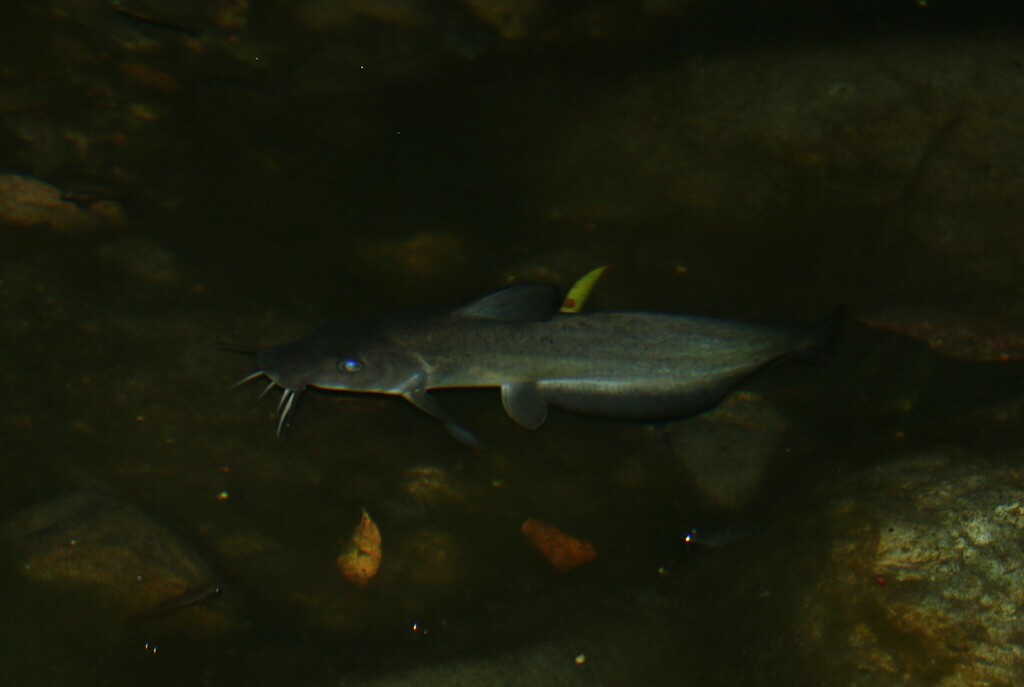
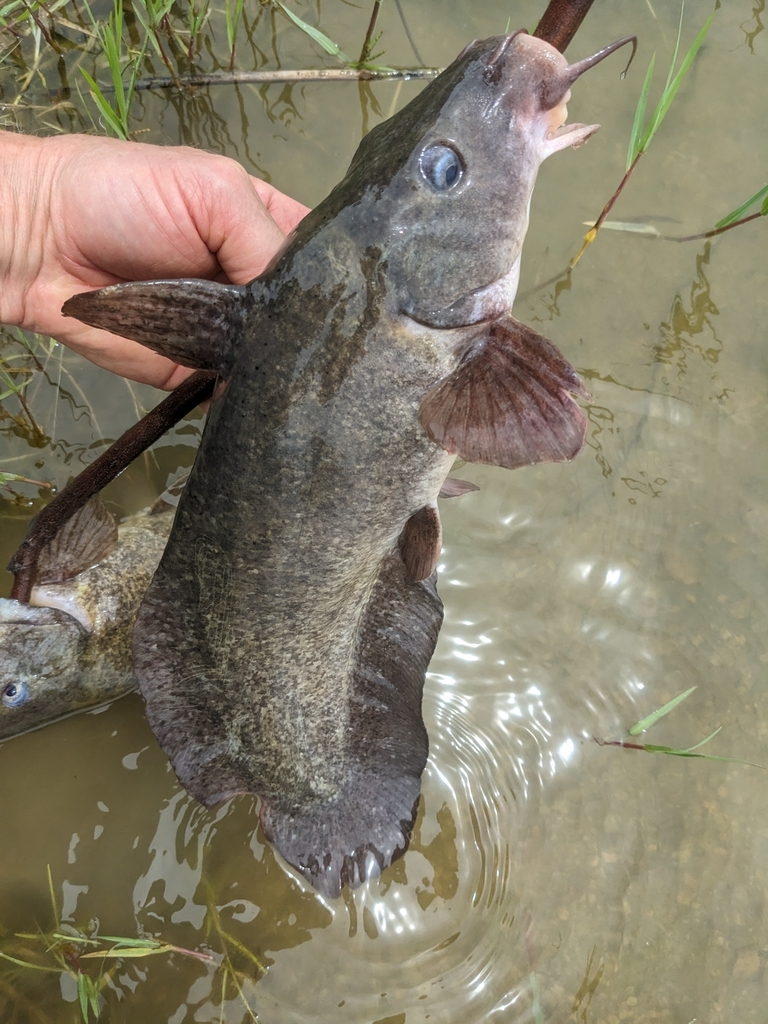
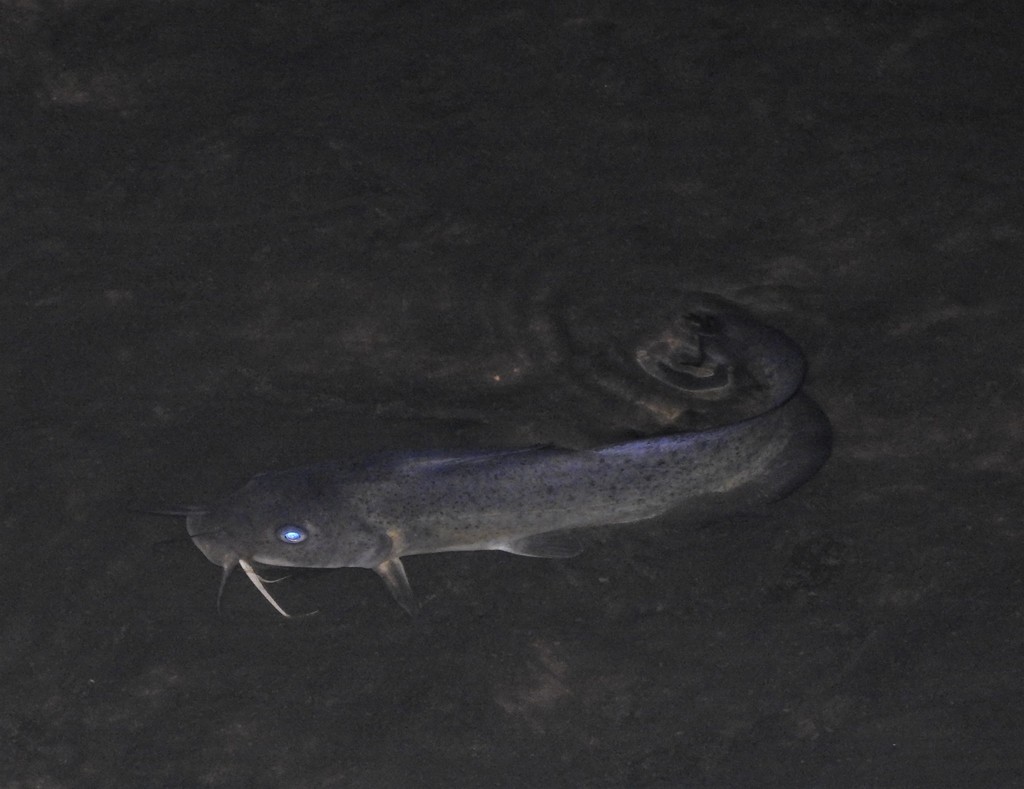
Fish photographed in Australia and shared on iNaturalist and Wikimedia Commons. Got a better one? Put it in a dispatch.
Handling & release
- Hold firmly behind the spines, or lay it on a wet mat.
- Remove the hook with pliers; catfish often swallow baits, so cut the line if it's deep.
- Release inland fish quickly.
On the table
Catfish are superb eating — firm, white and almost boneless. Keep them only where the rules allow, which mostly means coastal water.
Rules & seasons
- QLDMinimum 35 cm, possession 5 combined with all other freshwater catfish.
Checked October 2026. Rules change and vary between waters — confirm with the state agency before you fish: NSW · VIC · QLD · SA
Freshwater catfish: questions
Do freshwater catfish sting?
They have sharp spines on the dorsal and pectoral fins that can puncture skin and cause a painful wound. Handle them carefully.
Can you keep freshwater catfish?
In Queensland and many coastal waters, yes, within limits. In much of the Murray–Darling they're protected — check the rules for your water.
Latest Freshwater catfish dispatches
All →No freshwater catfish dispatches yet. Be the first to write one